
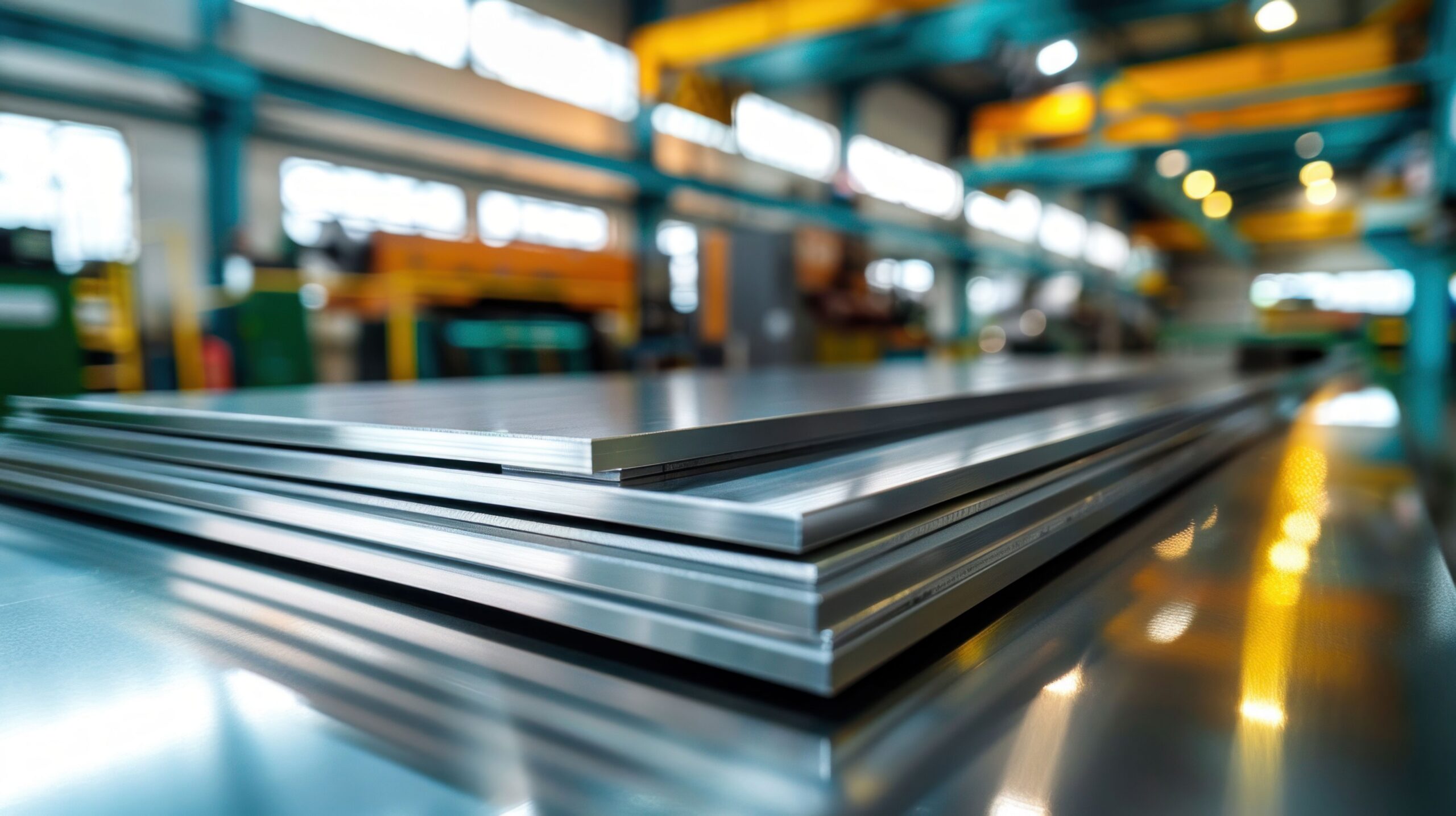
Will it Etch? is our monthly series on what’s possible with photochemical etching, one material at a time.
304 stainless steel barely needs an introduction. It’s the most widely used stainless grade in the world. Roughly half of all stainless produced globally is austenitic, and 304 is the one doing most of the heavy lifting. You already know the pitch: 18% chromium, 8% nickel, excellent corrosion resistance, good formability, available everywhere in every temper and thickness imaginable. It’s the default. The safe pick. The metal equivalent of ordering the club sandwich.
So why do so many engineers still end up fighting it when the parts get small, thin, or precise?
What makes 304 tricky to work with
The issue isn’t the material. It’s what happens when you try to cut it into the kinds of parts that actually matter: shims, flat springs, spacers, clips, shields.
304 work-hardens aggressively. Every pass of a tool makes the next cut harder, which accelerates tool wear and pushes tolerances out of spec. For thin parts like shims, that’s a serious problem: the material you’re trying to hold to ±0.001” is actively fighting you. Stamping can handle volume, but tooling costs climb fast once your geometry gets complex or your design is still iterating. And stamped shims come with burrs. Burrs on a shim mean it doesn’t seat flat. A shim that doesn’t seat flat is just an expensive piece of scrap.
Flat springs are worse. Stamping and laser cutting both introduce mechanical stress and heat-affected zones that alter spring temper. If your spring’s recoil, fatigue life, or deflection characteristics get changed during fabrication, you’re not making the part the engineer designed. You’re making something close to it and hoping no one notices.
So, back to the obvious question: will it etch?
Absolutely. 304 stainless is one of our most frequently etched materials, and it’s a near-perfect fit for the process. In practice that means:
- Thicknesses from 0.001” to 0.040”. The sweet spot for shims, springs, and precision spacers.
- Burr-free, every time. No secondary deburring. Shims come off the panel ready to seat flat.
- Zero work-hardening. The chemical process doesn’t touch the material’s temper, spring properties, or corrosion resistance.
- Complexity is (basically) free. A shim with 200 features costs the same per piece as a blank washer.
- No hard tooling. Phototooling is generated from your CAD data, so design revisions don’t mean scrapping a die.
The real punchline
Nobody questions whether 304 stainless is the right material. But plenty of engineers are still using the wrong process to shape it. If you’ve got a shim that won’t sit flat, a spring that’s losing its temper during fabrication, or a thin part that keeps drifting out of tolerance, the fix might not be a tighter spec on your current vendor. It might be a different process entirely. Send us the print. We’ll tell you what we can do with it.
Verdict: 304 stainless does etch.
More on our capabilities: photochemical etching of stainless steel and precision shims.
Have an etching need or challenge for our team? Request a quote or talk to a specialist.